
IVAN KARAMAZOV
Read The Brothers Karamazov with Dostoevsky: Lenten Week 2

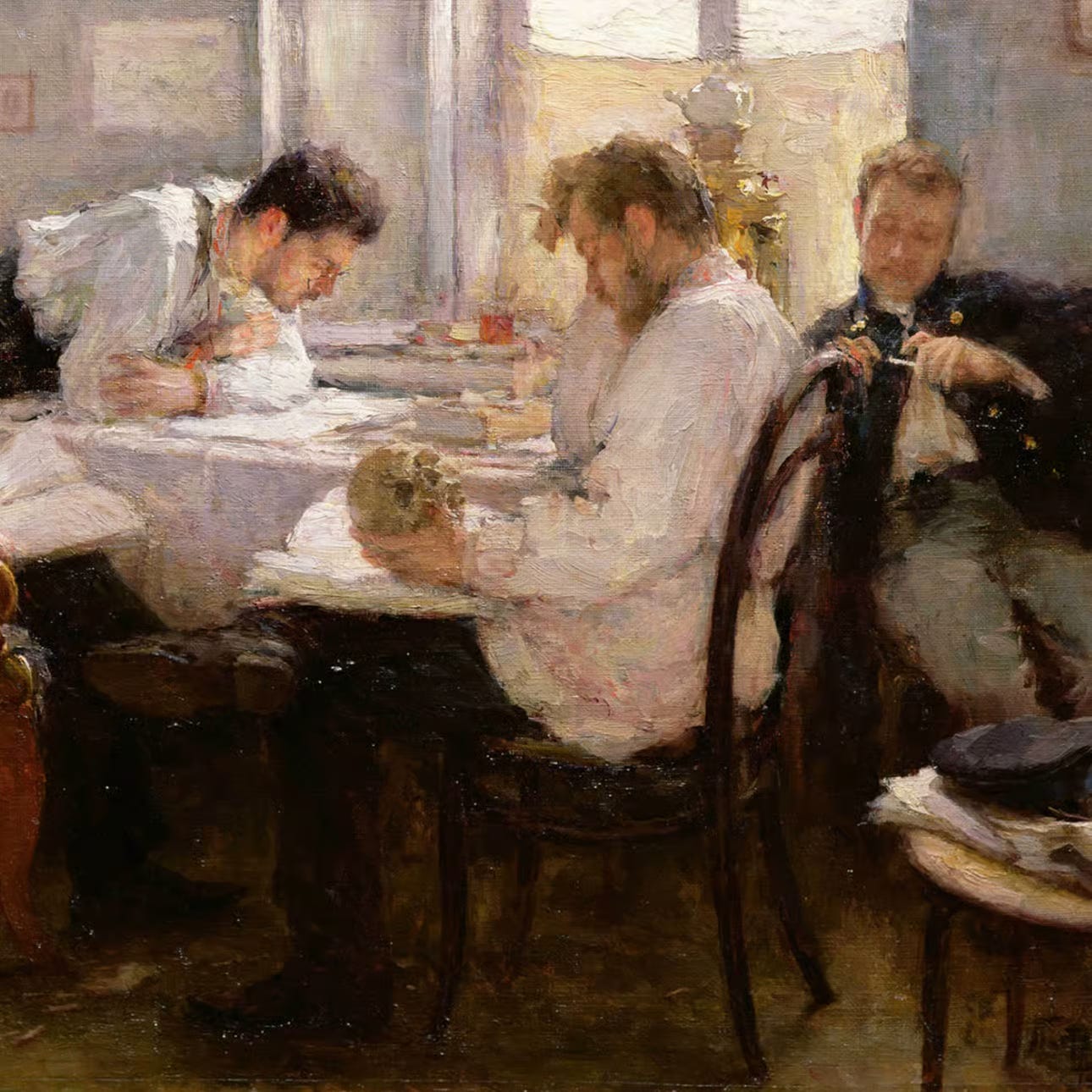
For generations, readers have regarded Dostoevsky’s The Brothers Karamazov as one of the greatest ever written. It is impossible for any reader to walk away this masterpiece without change and admiration.
Through the sensual Dmitri, the intellectual Ivan and the spiritual Alyosha we are given an illuminating glimpse into Dostoevsky’s faith, struggle with the problem of evil, relationship with God, nature of humanity, sin, and grace. Each brother represents a different response to God: passion, rebellion and trust.
The story begins with the Karamazov family, in which relationships between the father and his sons are complex, chaotic, fragile, bitter and deeply wounded. Yet within this tragic family grows into a profound insight about rebellion, separation, return and restoration, not only between human beings, but between God and human beings.
As we read along the stories, we are gradually drawn into their journey, which is full of bitter pain at first, but of hard-won hope at the end. As C.S. Lewis once said, “We are not necessarily doubting that God will do the best for us; we are wondering how painful the best will turn out to be.”
Indeed, the road towards what is best is hardly painless.
Each brother has their own painful part to play. But each life by the end of the book is being kneaded in the hands of an most active, and pursuing Love.
This week, we turn to the middle brother, Ivan Karamazov. To understand him is to face some of the most unsettling and heavy questions in the novel, perhaps in our own hearts.
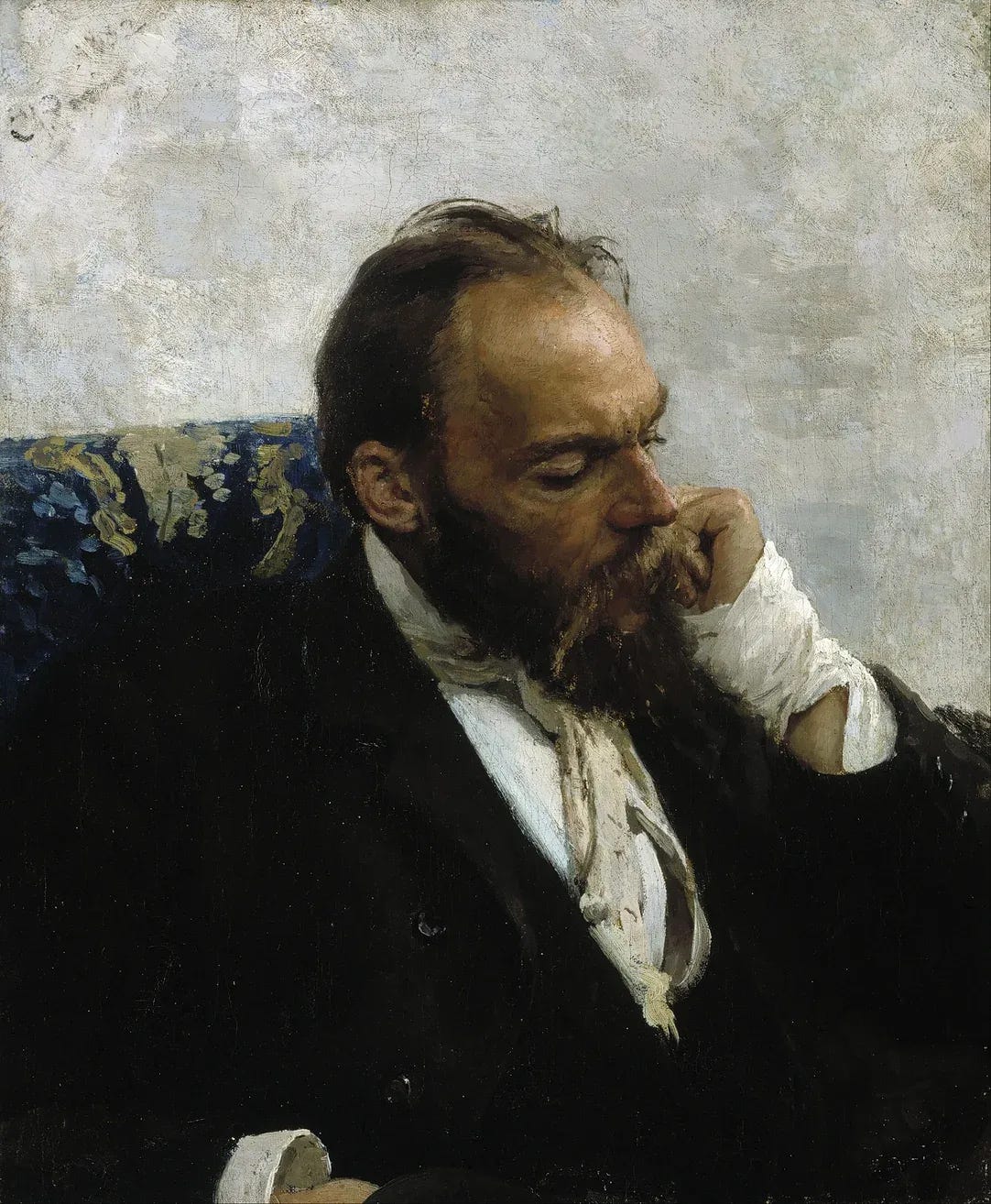
Ivan is the most intellectual and rational of the three brothers, compared to the wildly sensual Dmitri, and gentle, spiritual Alyosha.
What shapes Ivan into an intellectual unbeliever lies in what Ivan has always been lacking—the absence of affection. Growing up in a deeply broken family, Ivan was forced to face life without love and care of parents. Particularly, his father, Fyodor Karamazov, was absent and irresponsible. Ivan, thus, had to learned early to rely on intellect rather than relationship. Reason becomes more reliable than love. Independence feels more secure than trust.
Ivan denies authority of God, mainly because he rejects participation in relationship for love, dependence and surrender. He remains detached from those closest to him. His struggle with God is deeply connected to his struggle with relationship.
Ivan believes understanding must come first before belief. He cannot accept a God whose world allows suffering—especially the suffering of innocent children. Innocent creatures specially children should be permitted to avoid suffering of any kind. He refuses to build his faith on a future harmony that is purchased by present suffering. And He believes that grown-ups are supposed to pay the price of being their own gods, but children should be spared for their innocence.
In the chapter “Rebellion,” Ivan gave his most powerful protest.
“The second reason why I won’t speak of grown-up people is that, besides being disgusting and unworthy of love, they have a compensation—they’ve eaten the apple and know good and evil, and they have become ‘like gods.’ They go on eating it still. But the children haven’t eaten anything, and are so far innocent. Are you fond of children, Alyosha? I know you are, and you will understand why I prefer to speak of them. If they, too, suffer horribly on earth, they must suffer for their fathers’ sins, they must be punished for their fathers, who have eaten the apple; but that reasoning is of the other world and is incomprehensible for the heart of man here on earth. The innocent must not suffer for another’s sins, and especially such innocents!”
Ivan’s powerful argument against suffering on innocent children remains just a part of his philosophy.
In fact, his best argument about the denial of God’s love, and redemption could be found in the famous chapter, “The Grand Inquisitor.”
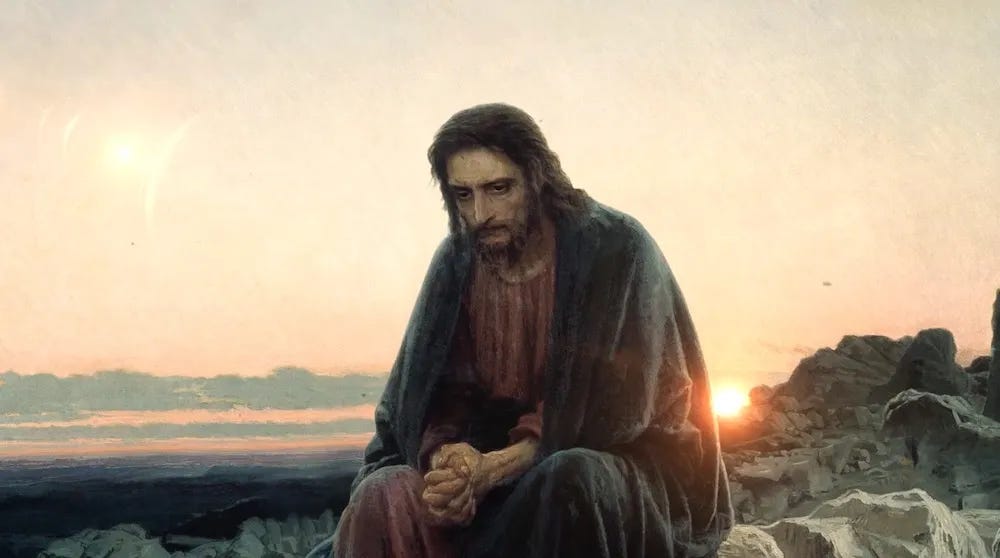
There, Ivan imagines Christ returning to earth in the 16th-century Spain. Instead of being welcomed, Christ is arrested by the Church. The Grand Inquisitor and his church accuses Him of giving the people too much freedom. Ivan argues that human beings cannot bear freedom, because their free choice given by Christ would put them in the great risk of uncertainty and insecurity. People do not truly want freedom; they want bread, security and certainty.
The Inquisitor argues that humans could achieve true happiness only when they give up the freedom that Christ promises and choose comfort and control. It is better for them to be mercifully and gently enslaved than to be set free.
Ivan through this imaginary story tells us an alerting reality that is still echoing today. He says,
“There are three powers, three powers alone, able to conquer and to hold captive for ever the conscience of these impotent rebels for their happiness—those forces are miracle, mystery and authority.”
Although Ivan is more intelligent and intellectually confident than his brothers, he is much more vulnerable than he appears.
He adopts a worldview that God’s love and suffering do not meaningfully serve the growth of one’s soul and heart. He reasons that everything done by human is permissible, if God cannot be fully explained. To explain is more important than to trust. To reason is better than to simply believe.
But Dostoevsky’s attempt to build such character as Ivan does not merely to show how to defend belief from unbelief. It is far deeper than that.
It is not about intelligence against simplicity.
It is pride against humility.
Ivan is ill in letting his pride work through the myth of Christianity. He cannot accept a world that accommodates truth, goodness and beauty he cannot morally approve. He cannot kneel before a truth that surpasses his understanding. He cannot accept suffering, and even the surrender that faith requires.
Christ, however, does the opposite.
Though sinless and righteous, He humbles Himself in a broken world.
As Scripture says,
“The message of the cross is foolishness to those who are perishing, but to us who are being saved it is the power of God.”
1 Corinthians 1:18
To Ivan, the cross looks morally foolish and nonsensical. But to those being saved, there is a power deeper than our understanding— the power of self-giving love.
And again,
“In your relationships with one another, have the same mindset as Christ Jesus:
Who, being in very nature God, did not consider equality with God something to be used to his own advantage;
rather, he made himself nothing by taking the very nature of a servant, being made in human likeness.
And being found in appearance as a man, he humbled himself by becoming obedient to death—even death on a cross!”
Philippians2:5-8
During this Lent, we’re not only fasting from food, social media, and habits, but also fasting from pride, judgement and disbelief. Fasting from what we’re used to do is good, but it’s not the goal. Our goal is to become more like Jesus rather than deprived. It is about we being emptied so that Christ may fill us.
Lord, we pray, empty us, fill us, and use us. Help us not to live and fast to impress, but to better server others better, to think more of the interest of others. The story of Ivan reminds us that the cross invites us into another way—the way of decrease.
Thank you, Stanley, for your essay on this masterpiece. Few are those who are able to comment intelligently on Dostoevsky. The paintings you chose to accompany the essay were exquisite.