
ON GROWTH
To grow up is to come back into the parent’s arms.

In The Last Battle, we learn that Susan, as Peter tells, is “no longer a friend of Narnia,” because she is “too keen on being grown-up.” Though Susan had lived through some of the most glorious stories in the chronicles, she felt those life-changing experiences as mere wonderful memories, and reduced them to “all those funny games we used to play when we were children.”
And in The Voyage of the Dawn Treader, Aslan tells Lucy and Edmund that they will no longer come back to Narnia, for they are too old and must begin to come closer to their own world.
If Narnia was a world built on wonder, belief, and surprising grace, we surely can’t chance to enter only by mere maturity and age. For what I believe with certainty is that Narnia can’t be explained merely by rational thoughts, logical reasons, and scientific understanding; our world can be.
The primary principle of admission to Narnia is humility, imagination, and significantly having a childlike heart. Aslan might now stop us from entering, not because we age, but because he finds our hearts being so focused on being grown-up.
Surely one doesn’t need belief and wonder in order to pursue better living conditions. Modern adulthood values practicality, utilitarianism, or social usefulness. Yet a childlike heart doesn’t seem helpful or practical to it; it doesn’t easily fit the world’s social fashion and expectation.
To grow up in the world means to constantly change our visions in order to better conform to the pattern and fashion of the world.
But to grow up in Christian way means differently. It means to change by all means our world to fit only one vision.
My only goal in this world is to get to the Heaven and help others get there too.
Growing up is not progress unless I know the goal of growing up.
And simply moving forward is not true growth unless I am walking in the right direction.
G.K. Chesterton remarks, “progress is a useless word; for progress takes for granted an already defined direction; and it is exactly about the direction that we disagree.”
We cannot in a sense truly grow up unless we can state what our goal is; then we can determine whether we’re drawing near to it or drifting away from it.
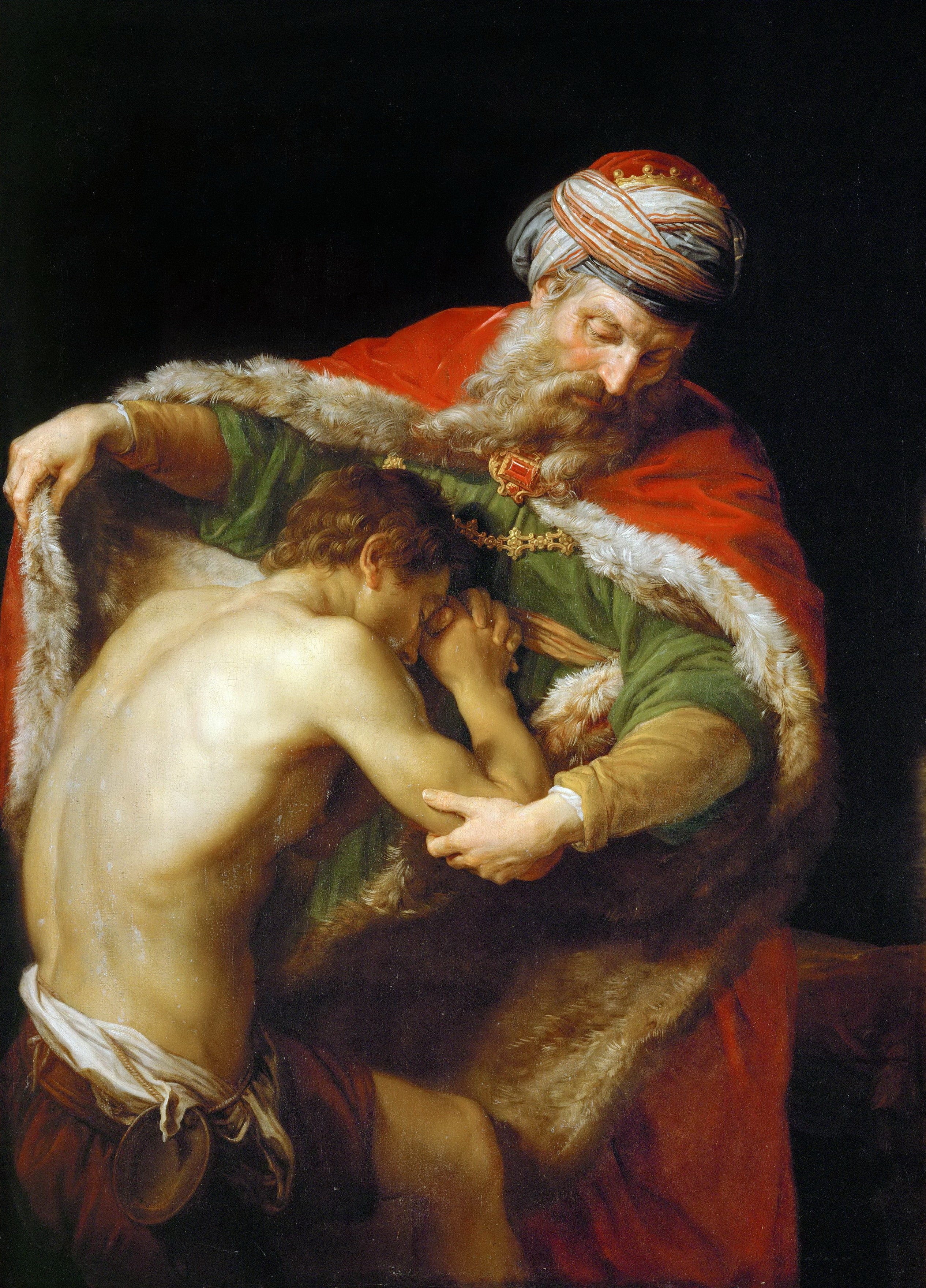
In the Parable of the Prodigal Son (Luke 15), Jesus tells us the true meaning of “growing up”—the return from our pursuit of self-independence, self-indulgence, self-help, and self-development; from self-reliance to childlike dependence—back into the Father’s arms.
The younger son had insisted on living life by his own way. But when his life had fallen into pieces, he discovered that real growth was not built on self-strength, but to return to the One who gives life and redemption.
18 I will set out and go back to my father and say to him: Father, I have sinned against heaven and against you.
19 I am no longer worthy to be called your son; make me like one of your hired servants.’
20 So he got up and went to his father. “But while he was still a long way off, his father saw him and was filled with compassion for him; he ran to his son, threw his arms around him and kissed him.
21 “The son said to him, ‘Father, I have sinned against heaven and against you. I am no longer worthy to be called your son.’
22 “But the father said to his servants, ‘Quick! Bring the best robe and put it on him. Put a ring on his finger and sandals on his feet.
23 Bring the fattened calf and kill it. Let’s have a feast and celebrate.
24 For this son of mine was dead and is alive again; he was lost and is found.’ So they began to celebrate.
God’s Kingdom loves and welcomes the childlike, repentant and humble hearts. But He rejects and shuts out the pride, self-assertive and impulsive ones.
The prodigal son wanted to be mature, but to me rather childish than childlike. He ignored and avoided the real hard work of growing up. He went off with the money taken from his father and squandered all of them in the life of self-indulgence. He at last lived in misery and found himself starving and sharing food with pigs.

But it was precisely this collapse that awakened his repentant heart. He then returned home and his father; he didn’t return as a successful son, but as a repentant child. He chose to grow up only by turning back from the wrong direction.
Real growth is not achieving independence, but returning to the One in whom we find forgiveness, redemption and life.
It is rediscovering that we are children and need the father.
Where the prodigal son met the father is the meeting place of childlikeness and maturity. We grow up not by proving our independence, but by letting ourselves be found and accepted in the arms of the father.
In ordinary thinking, growing up means to grow, to be strong, be wise, and mature.
But in Christian sense it means strong to be gentle, wise to be humble, brave to wonder, mature to be childlike.
Children discover wonder, goodness and beauty better than we adults do.
Their wisdom and innocence are the very treasures grown-ups have put away in the name of “growth.”
But spiritual growth doesn’t mean leaving things behind, but means recovering them: the freshness, wonder, gratitude, innocence and humility that childhood carries so naturally and effortlessly.
This is exactly the teaching of Christ in Matthew 18,
3 “Truly, I say to you, unless you turn and become like children, you will never enter the kingdom of heaven.
4 Whoever humbles himself like this child is the greatest in the kingdom of heaven.